

Founding Attorney
A practical guide to having important conversations with the people who matter most.
Why the Holidays Are the Best Time for These Conversations
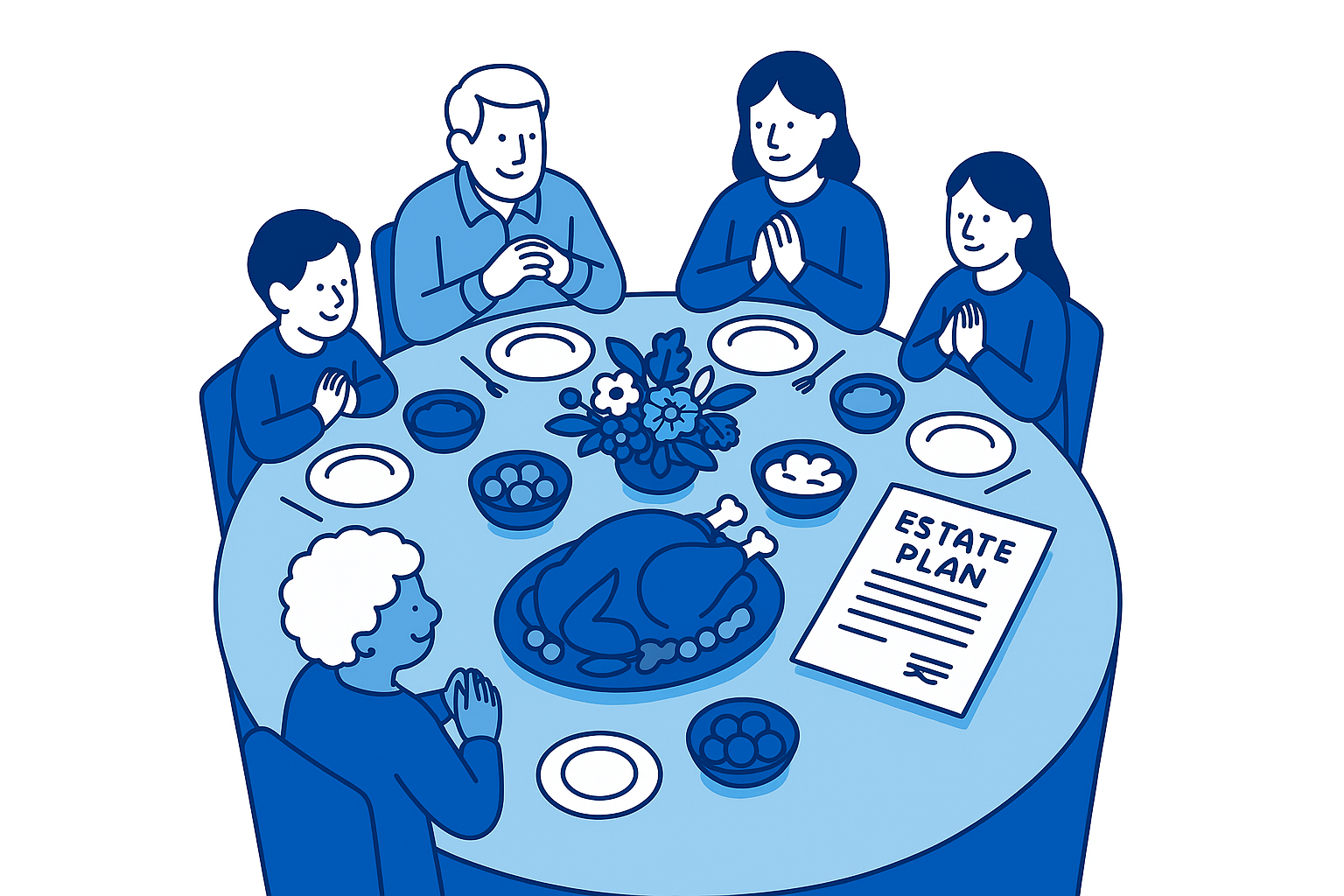
For many families, Thanksgiving is one of the few times each year when everyone is in the same place. Between shared meals and quiet moments, the holiday provides a natural setting for meaningful conversations — including those about future planning.
Estate planning isn’t about money. It’s about clarity, protection, and peace of mind. Talking now prevents confusion, conflict, and stress later.
The goal isn’t to make decisions at the dinner table — it’s to make sure everyone understands each other’s wishes and knows what the next steps should be.
How to Begin the Conversation (Without It Feeling Heavy)
Bringing up estate planning doesn’t have to feel uncomfortable. Here are a few gentle openers that feel natural during Thanksgiving:
- “I’ve been thinking about organizing some of my financial and legal documents — have you done any of that yet?”
- “Since we’re all together, maybe we should talk about who we want to handle things if someone gets sick.”
- “I read something recently about digital assets and estate planning — did you know someone needs permission to access online accounts after death?”
- “I want to make things easier for you all someday, so I’m putting things in writing. Have you done anything like that?”
You’re not asking for numbers or private details — only encouraging a conversation about planning, not possessions.
Topics Worth Discussing With Family
You don’t need to cover everything. Focus on the essentials, including:
1. Health Care Decisions
- Who would make medical decisions if someone becomes incapacitated?
- Are health care proxies up to date?
2. Financial Decision-Making
- Who is the best person to help manage bills or assets if needed?
- Is there a durable power of attorney in place?
3. Wills and Beneficiary Designations
- Does everyone have a Will?
- Do retirement accounts and insurance policies list the correct beneficiaries?
4. Digital Assets
- Who should have access to email, cloud storage, photos, or financial apps?
5. Wishes for the Future
- Long-term care preferences
- Funeral or memorial preferences
- Charitable intentions
These discussions help ensure family members understand each other’s values, priorities, and needs.
How to Keep the Conversation Positive
- Keep it short — this isn’t a legal meeting
- Stay calm and supportive — don’t pressure anyone
- Focus on care, not control
- Avoid discussing inheritances as dollar amounts
- Let everyone speak
- End the conversation with next steps
The best outcome is simply agreement that planning matters — and commitment to talk to a professional.
What This Means for Your Family
Thanksgiving is not the time to finalize documents — it’s the time to open the door.
A simple conversation today can prevent confusion, stress, and family conflict years down the road.
At Sverdlov Law, PLLC, we help families turn these conversations into clear, legally sound plans that reflect their true intentions and protect loved ones for years to come.