

Founding Attorney
“Is Your Business Protected If Something Happens to You?” with Katra Sverdlov
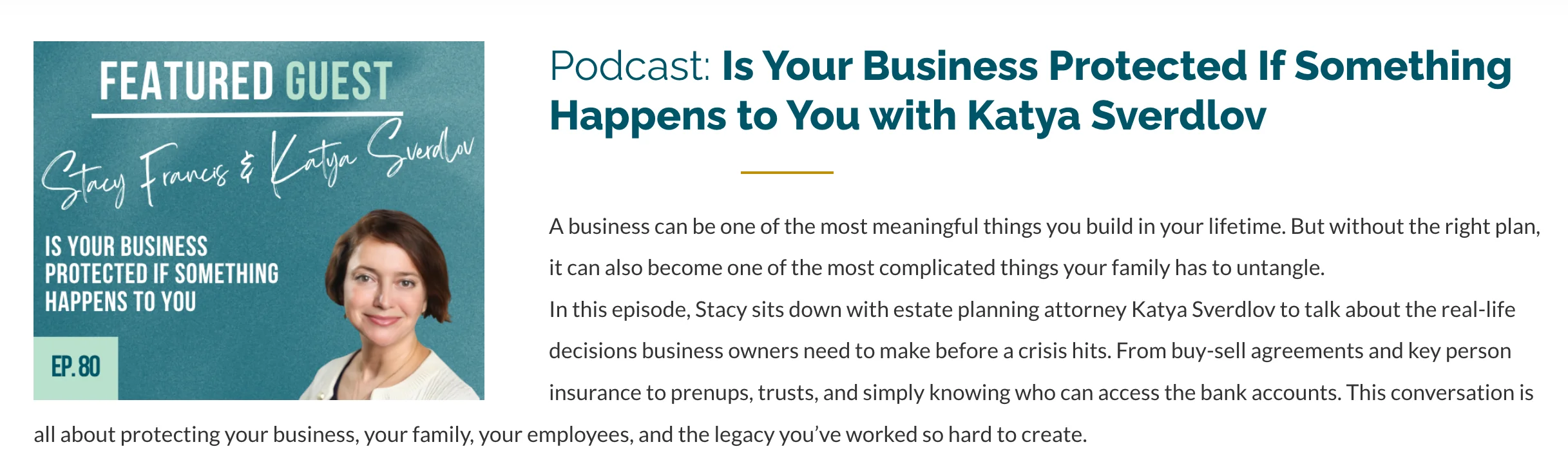
What Happens to Your Business If You’re Suddenly Not the One Running It?
If you own a business, this is a question worth answering before you ever have to.
What happens if you become unable to run things tomorrow—temporarily or permanently? Who has access? Who makes decisions? And what happens to everything you’ve built?
It’s not an easy topic, which is why so many business owners put it off.
But without a plan in place, even a successful business can quickly turn into a source of confusion, stress, and conflict for your family, partners, and employees.
Why Business Estate Planning Matters
A business is often one of the most meaningful assets you’ll ever create. It represents years of work, risk, and vision.
But unlike personal assets, a business doesn’t automatically “transfer” smoothly without planning. If something unexpected happens, the absence of a clear structure can leave major decisions up in the air.
That’s why estate planning for business owners goes far beyond wills and personal trusts—it needs to include the operational and financial reality of the business itself.
A Conversation Every Business Owner Should Hear
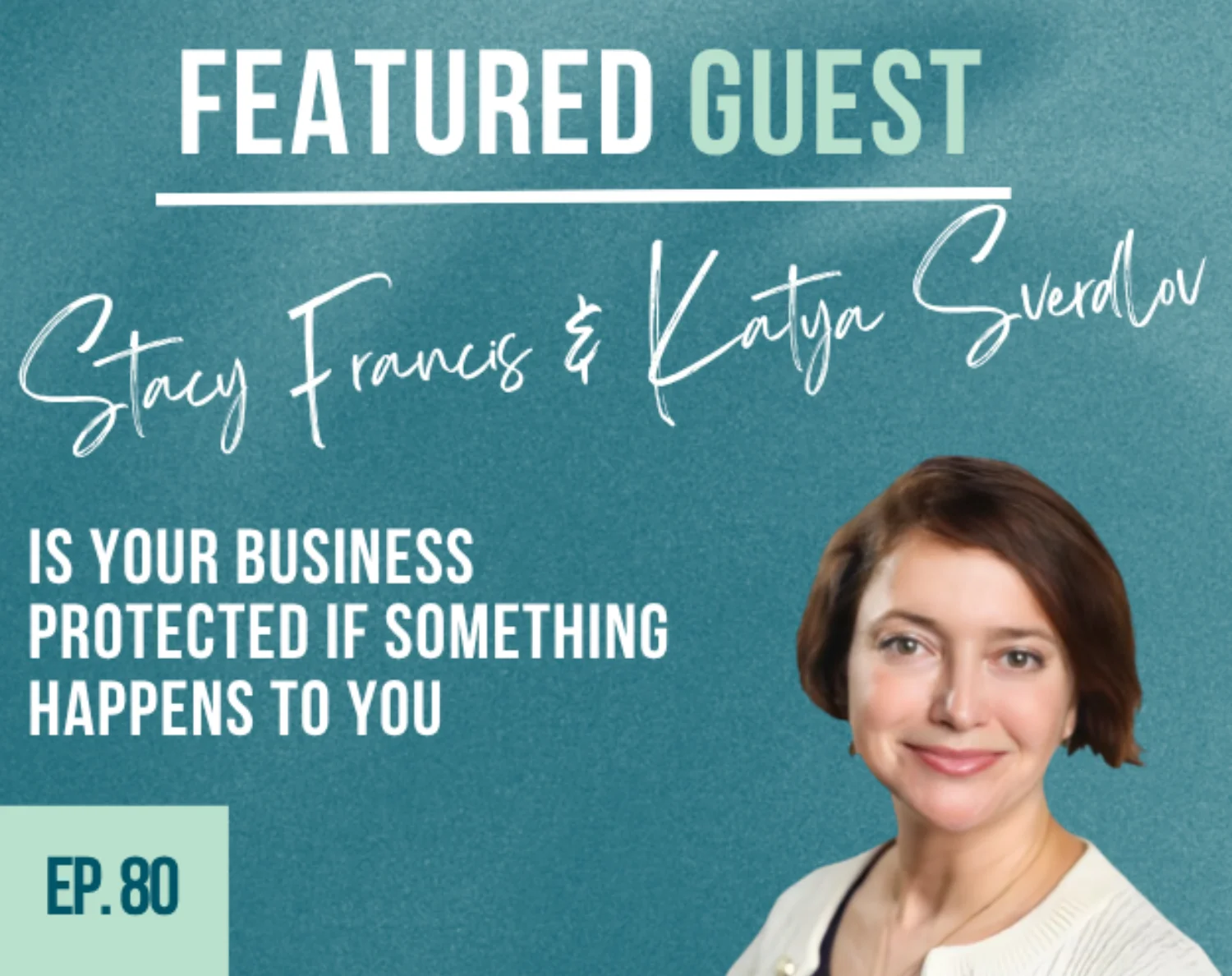
In a recent episode of The Francis Financial Podcast with host Stacy Francis, our founder and estate planning attorney, Katya Sverdlov, sat down to break down what business owners often overlook when it comes to planning ahead.
The conversation focuses on the real-life decisions that need to be made before a crisis ever happens—not after.
Key Topics Covered in the Episode
Here are some of the most important takeaways from the discussion:
1. Estate Planning Must Go Beyond Personal Assets
Most plans focus only on wills, trusts, and family assets—but business continuity requires a separate layer of planning.
2. The First Step Most Entrepreneurs Skip
Start with a simple but powerful exercise: create a clear list of your business essentials—bank accounts, insurance policies, payroll contacts, and key operational information. This alone can prevent major disruption.
3. Buy-Sell Agreements Protect Everyone Involved
A properly structured buy-sell agreement helps protect your heirs, business partners, and the future stability of the company if ownership changes unexpectedly.
4. Insurance Is a Business Continuity Tool
Life insurance and disability coverage aren’t just personal protections—they can be critical tools that keep a business running during transition periods.
5. Ownership Impacts Life Events Like Marriage and Inheritance
Business ownership can significantly complicate divorce, inheritance, and marital property division if it isn’t properly structured in advance.
6. Timing and Communication Matter
Trusts, asset protection strategies, and family conversations all need to happen early—before decisions are forced by circumstance.
The Bigger Picture: Protecting What You’ve Built
This conversation isn’t just about legal documents. It’s about protecting your business, your employees, your family, and the legacy you’re working to build.
Without clear planning, even a thriving business can become difficult to manage or transfer when life changes unexpectedly.
With the right structure in place, however, you create stability—not just for yourself, but for everyone who depends on the business.
Listen to the Episode in Full
To hear the full conversation between Stacy Francis and Katya Sverdlov, click here to listen to the full episode.
The information provided in this blog post is for general informational purposes only and does not constitute legal advice. Every inheritance dispute case is unique and requires individual analysis. Please contact Sverdlov Law PLLC for a confidential consultation regarding your specific circumstances.