

Founding Attorney
Should AI Draft Your Will?
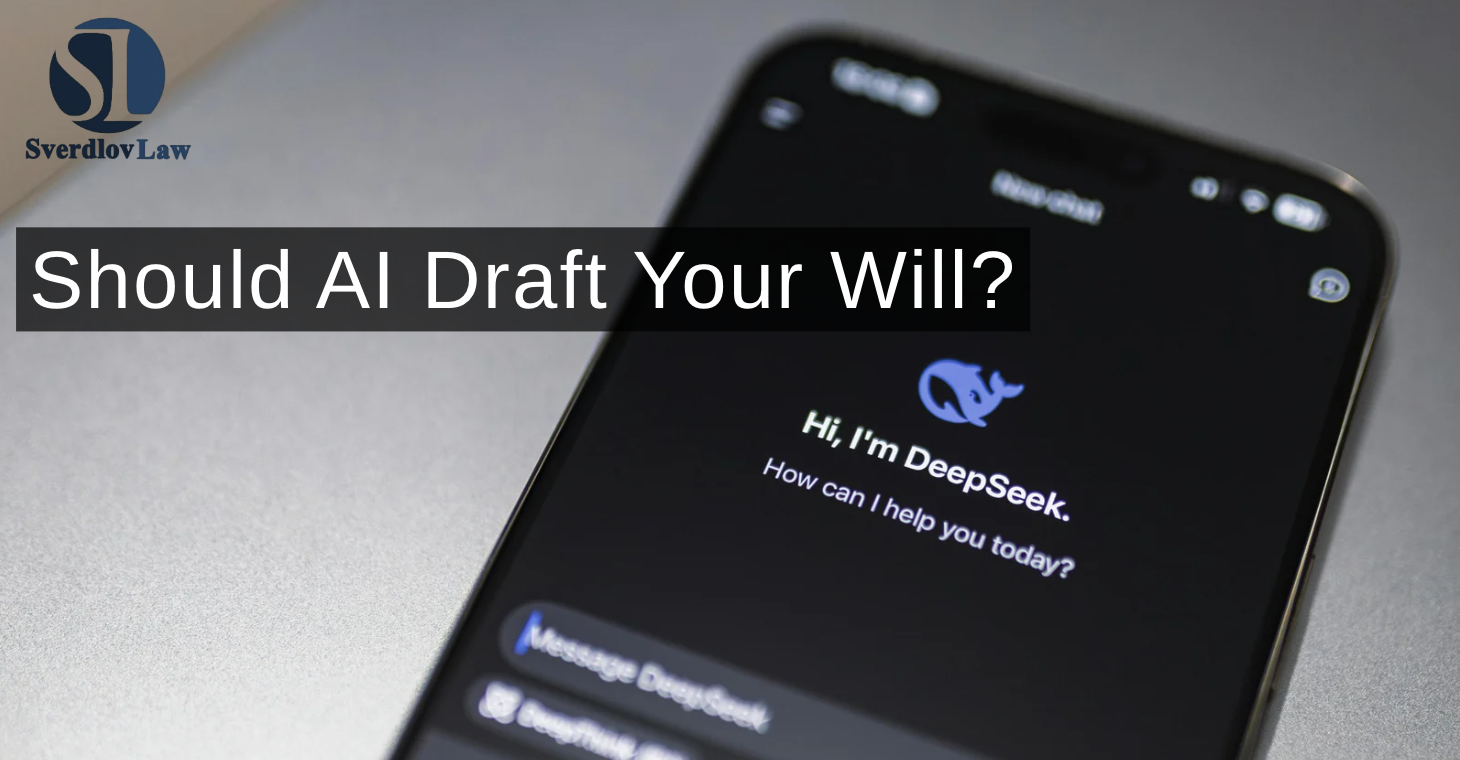
We use artificial intelligence in our own practice, for research and for summarizing documents. So when a prospective client walks in with an AI-generated estate plan, we do not dismiss it.
It is often fine on the surface and wrong underneath, in ways a New York court will care about later.
What AI Actually Gets Right
Ask an AI tool to draft a will, and it will draft one. Ask it to explain the difference between a revocable and an irrevocable trust, and the explanation will usually be accurate. Clients who arrive having used it tend to ask sharper questions, which is a real benefit.
The problem shows up one step later, when AI has to decide what you actually need instead of just explaining what exists.
The Trust Robert Should Have Had
Robert, a retired teacher in Queens with no spouse or children, came to us with an AI-drafted will leaving everything to two close friends and intentionally leaving out his half-brother, a man he had not spoken to in twenty years. What the AI tool never told him is that because Robert had no spouse, children, or living parents, his half-brother was still his distributee, the person who would inherit if there were no will.
New York probate requires notice to distributees regardless of what the will says, and that notice gave his half-brother standing to contest. By the time the estate settled, Robert’s friends would have spent close to three years and over twenty thousand dollars defending a will that a properly funded revocable trust would have made unnecessary, since assets in a fully funded trust pass to beneficiaries without probate, and without notice for an estranged relative to act on. The AI answered the question Robert asked, how to write his half-brother out. It never asked who his closest living relatives were, the detail that determined whether a will alone would hold up.
What you can do: If you have no spouse, children, or living parents and plan to leave a sibling out, that sibling is likely still your distributee under New York law. Ask an attorney whether a funded revocable trust would remove the opening for a contest.
When a Deed Doesn’t Protect What You Think It Does
New York now allows a transfer-on-death deed for real property, letting you name a beneficiary who receives your home directly at death, outside probate. What it does not do is protect that home while you are alive, and that gap is where we have seen real damage.
Diane, a widow in the Bronx, used an AI tool to prepare a transfer-on-death deed naming her daughter as beneficiary of her house. A year later, Diane was diagnosed with Alzheimer’s and needed full-time nursing home care. Because a transfer-on-death deed does not transfer ownership until death, Diane still owned the house outright while alive, which meant it counted as her asset when the family applied for Medicaid to help cover her care. The house had to be spent down before Medicaid would step in, the very asset it was supposed to protect. A properly funded irrevocable trust, set up years earlier, could have kept the house from counting as Diane’s asset at all.
The AI that prepared her deed never mentioned Medicaid, the look-back period, or a trust as an alternative.
New York’s Medicaid look-back period is five years, so timing matters as much as the tool!
What you can do: If long-term care is a real possibility and your plan includes a transfer-on-death deed, ask an attorney whether an irrevocable trust offers protection a deed cannot, and start that conversation before care is actually needed.
Confident Advice That Is Already Out of Date
AI systems learn from an enormous amount of material, some current, some years old.
We have reviewed AI-generated explanations built on rules that had since changed, presented with the same confidence as accurate ones. A lawyer has a professional obligation to check the law is still current, because AI has no such obligation, and no consequence for getting it wrong.
What you can do: Treat any AI-generated legal explanation as a starting point, not a final answer, especially involving a dollar threshold, deadline, or newer statute. Bring it to an attorney and ask directly whether it still holds.
Why We Start With You, Not With the Document
Good estate planning looks more like a visit to a physician than a trip to the pharmacy. A competent physician asks what is wrong before prescribing anything. Estate planning works the same way. The first question is rarely, should I have a trust. The better question is, what problem are we solving?
That question is behind everything we do at Sverdlov Law. Our mission is to preserve both family assets and family harmony, helping people plan for incapacity and death before a crisis forces the decision, through wills, trusts, powers of attorney, health care proxies, trust funding, and guardianship planning – chosen to fit your family.
What a Thoughtful Plan Actually Looks Like
If you have already used an AI tool, bring it to your consultation. We are not offended by it.
Before you meet with an attorney:
- Write down the specific problem you are trying to solve, not just which document you think you need.
- List every account and property you own, and how each is currently titled or deeded.
- Pull any trust, will, or deed you already have, and check whether they name the same beneficiaries.
- Note any family member you plan to leave out, and bring it up directly, since that is exactly where a will
alone can go wrong.
Thinking about creating a will? While AI can be a helpful tool for many things, your estate plan is personal, and it is important to make sure it is done right. If you have questions about creating a will or want to talk through your family’s unique needs, contact Sverdlov Law, PLLC today. We would be happy to help.
This is general information, not legal advice, and every family’s situation is different. Sverdlov Law PLLC serves clients across Manhattan, Brooklyn, Queens, and the Bronx. If you have an AI-drafted plan sitting in a folder somewhere, that is worth a second look while any gaps are still easy to fix.
Click here to schedule a complimentary evaluation of your case.
The information provided in this blog post is for general informational purposes only and does not constitute legal advice. Every inheritance dispute case is unique and requires individual analysis. Please contact Sverdlov Law PLLC for a confidential consultation regarding your specific circumstances.